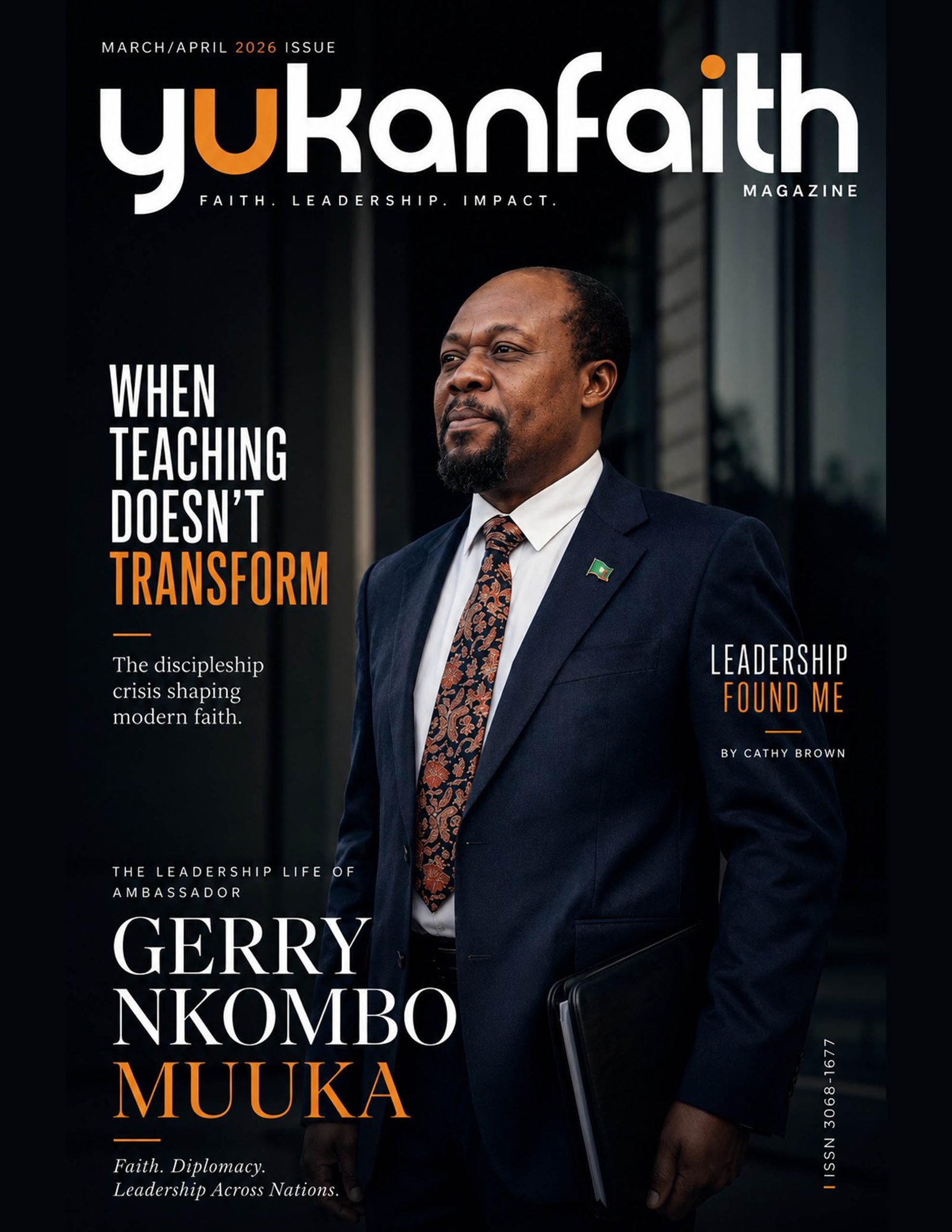
Before the Title Came the Call
The Leadership Life of Ambassador Gerry Nkombo
His Excellency Professor Gerry Nkombo Muuka, Zambia’s First Ambassador to the United Arab Emirates, on Faith That Takes Responsibility
On the morning of Monday, September 22, 2025, in the high-ceilinged hall of the State House in Lusaka, His Excellency President Hakainde Hichilema administered the oath that made Professor Gerry Nkombo Muuka the first Ambassador of the Republic of Zambia to the United Arab Emirates. Her Honor, the Vice President, Mrs. W. Mutale Nalumango, was present. The ceremony was brief. The arrival had been forty years in the making.
Twenty-five kilometers west of Monze, in the village where he was raised, an unfinished clinic was waiting for its windows. His ninety-one year-old mother was waiting too.
The title had finally caught up. The call had come decades earlier, and he had been answering it ever since.
It came at a kitchen table in southern Zambia, where a man with a fifth-grade education gathered his children before sending them to school and gave them their assignment.
“He would say, ‘I’m not sending you to school so you can come back and buy me bread and sugar and new shirts. I’m sending you so you can help your siblings. So you can help others.'”
It is the kind of sentence that becomes a compass. The boy who heard it has been navigating by it ever since. His parents, Cornelio Mufundisi Muuka and his mother, Mary Mutinta Muuka sold vegetables and chickens to keep their children in school.
School fees came from their hands. “That kind of love stays with you,” he says. “It forces you to wake up and study even when you don’t feel like it. You owe it to them.”
Responsibility, in the household where he was raised, was not a leadership theory. It was a debt of love. It is the foundation underneath everything he has built since.
In 1984, just before commencement at the University of Zambia, his body began to fail him. A mysterious illness without a name. His skin burned in sunlight. He could not wear shoes. He walked with a cup of water in his hand, pouring it over himself to cool his body. While his classmates crossed the graduation stage at the University of Zambia in Lusaka, the capital of Zambia, he lay indoors in the provincial capital of Mongu in Western Province, some 585 kilometers away. Hospitals across Zambia ran tests. None could tell him what was wrong.
Exhibit 2: His Highness Sheikh Mohammed bin Zayed Al Nahyan, President of the United Arab Emirates and Ruler of Abu Dhabi, receiving letters of Credence from Professor Gerry Nkombo Muuka, Zambia’s Ambassador Extraordinary and Plenipotentiary to the United Arab Emirates. The ceremony took place on Monday, 1st December 2025 at the Qasr Al Watan Presidential Palace in Abu Dhabi, capital of the United Arab Emirates.
Then the University of Zambia (UNZA) called early in 1985, shortly after the commencement ceremonies in December 1984 that he did not attend. That he could not attend. They wanted him to be a lecturer at UNZA. They were offering him a scholarship to study abroad, called a Staff Development Fellowship (SDF), reserved for the best graduating students from the University of Zambia. He was the only student, in Business, to graduate Summa Cum Laude (with Distinction) in that ceremony that he could not attend. He was still ill. He took the position anyway.
In August 1986, he boarded a plane to Murray State University in Kentucky in flip-flops, because closed shoes were still impossible. The August heat that greeted him was its own kind of trial. He went to class. He kept showing up. Healing came eventually, in the smallest possible form. He stopped adding salt to his food. Within months, he was well.
This is the first leadership lesson his life teaches, and it is one most leaders learn too late. The capacity to lead does not arrive when the conditions are favorable. It is forged when you accept responsibility before you feel ready, and trust that what you cannot yet do, God will meet you in the doing.
In December 1988, he would go on to earn his MBA from the Arthur J. Bauenfeind College of Business at Murray State University in Kentucky, USA, graduating with a 3.9 out of 4.0 MBA Graduate Grade Point Average (GGPA). He went back to what was now the Copperbelt University (CBU) in Kitwe, formerly the University of Zambia at Ndola (UNZANDO) to teach business courses.
The year 1990 saw him win a British Commonwealth Scholarship, all expenses paid, to study for his Philosopher’s Degree (PhD) in Business at the University of Edinburgh in Scotland, United Kingdom. He completed the PhD in record time, in September 1993, and went back to CBU.
In September 1994, he arrived back at his MBA alma mater, Murray State University in Kentucky, to teach Business Courses.
Six years after arriving back in Kentucky, in 2000 the Dean of the College of Business at Murray State (MSU) asked him to become Associate Dean. He was the first African to hold the position in the college’s history. He was one of only six Black faculty members on the entire roster. The expectations did not need to be spoken.
He led from the front. He took on AACSB accreditation, the gold standard held by only a small fraction of business schools worldwide, and shepherded the college through three successive review cycles to success. The MBA program he inherited in 2000 had 150 students. By Fall of 2012, it had some 300. He kept publishing. He kept teaching. There were nights he slept in his office during AACSB accreditation periods. The President of the university joked at one MSU faculty meeting that no one should adopt Gerry’s working hours.
He has 45 blind peer reviewed publications in 25 global journals, on top of two edited books.
“Leadership demands sacrifice,” he says. “But responsibility is something you steward. You cannot put it down once it is given to you.”
He carried it for twenty-four years.
By 2018, his next chapter was already being written elsewhere. The American University of Ras Al Khaimah in the United Arab Emirates had a Dean’s position open. He flew to the Gulf for the first time in his life, interviewed, and was offered the number two role instead. He had already done that work for two decades in Kentucky. He declined.
This refusal is small in the telling and large in the meaning. There is a yes that costs nothing and a yes that costs everything, and most careers are derailed not by the doors that close but by the lesser doors leaders accept out of fear that the right one will not open. He had learned, by then, the difference. Faith, in his hands, was not a feeling. It was the discipline of waiting for the assignment that matched the call, even when waiting looked like risk.
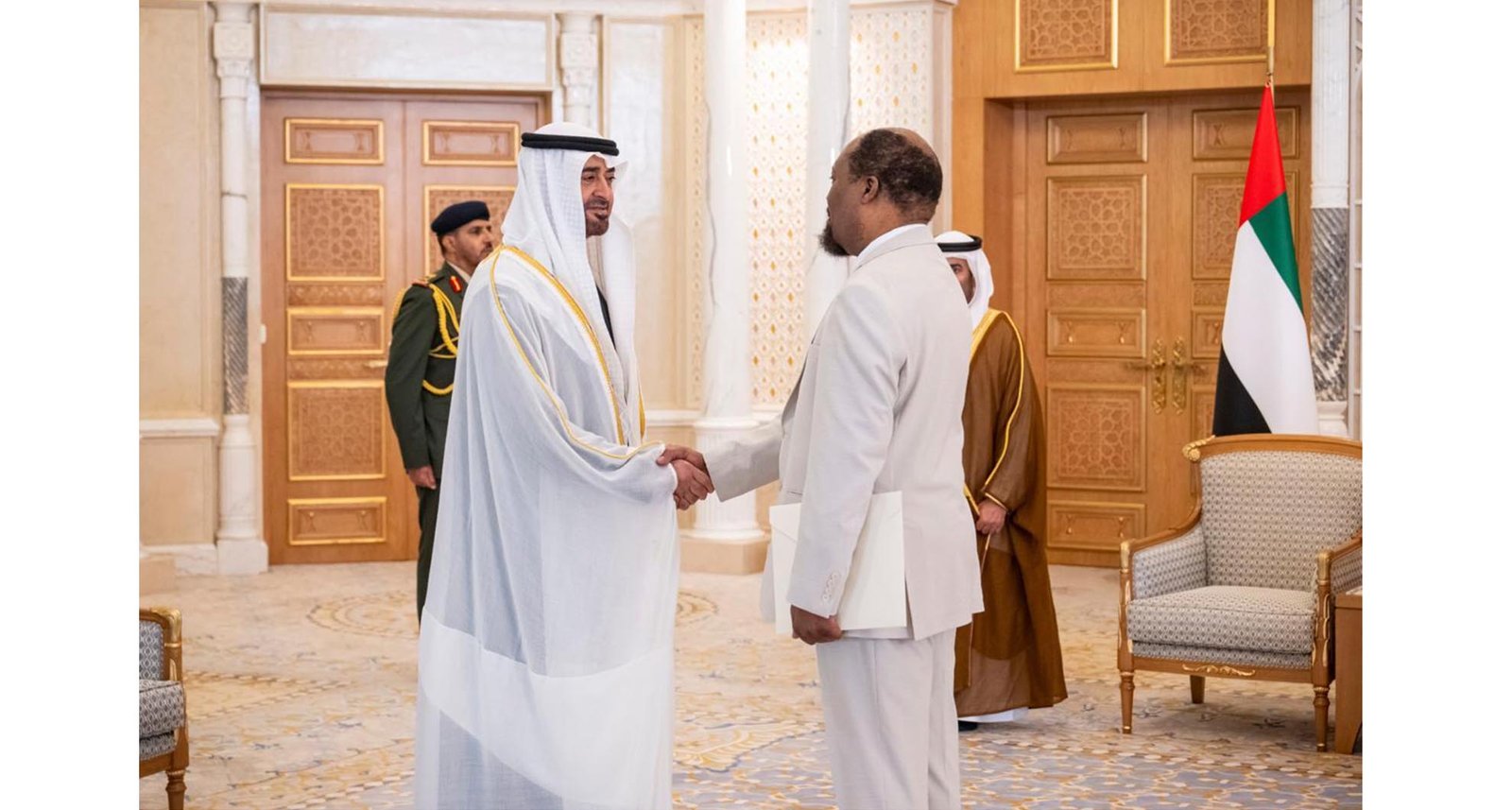
Exhibit 1: The Zambian President, Mr. Hakainde Hichilema, Officially Swearing in Professor Gerry Nkombo Muuka as Zambia’s First ever Ambassador to the United Arab Emirates (UAE). The swearing in ceremony took place on Monday, 22nd September 2025 at State House in Lusaka, the Zambian Capital.
One month later, his phone rang again. Al Ghurair University in Dubai, still in the United Arab Emirates. A Dean’s position. On August 24, 2018, he landed in Dubai and took the position of Dean of the College of Business.
The next chapter was supposed to be Iraq. He had accepted an appointment to the University of Kurdistan. His path was set. Then Zambia called him home. He never went to Iraq. In December 2023, he was appointed Consul General of Zambia in Dubai and the Northern Emirates, in the United Arab Emirates. By the morning of September 22, 2025, he was Zambia’s first ever Ambassador to the United Arab Emirates, for which he had to move to Abu Dhabi, the capital.
By the time the title arrived, he had been doing the work an Ambassador does for years.
He had already negotiated a Corporate Social Responsibility partnership with Malabar Gold & Diamonds, headquartered in India with a major presence in Dubai’s Gold Souk, that today provides free daily lunches for 8,500 schoolchildren across three schools in Lusaka for three years. For some, the school lunch is the second meal of their day, sometimes the only one. He visited a classroom shortly after the program began.
“I walked in after lunch,” he says. “I greeted them. The energy that came back. You could feel something happening. Hope was alive in that room.”
And he had been building a clinic.
Twenty-five kilometers west of Monze, in Senior Headman Joseph Haamavhwa’s area, an eight-room rural health clinic has been rising slowly from the ground since 2019 when he was business dean at Al Ghurair University in Kentucky. He has paid for every brick of it from his own salary. There has been no campaign. No donors. No press. There is now a three-bedroom nurse’s house on the property. There are three functioning boreholes pumping clean water to thousands of villagers across nine headmen’s communities. The Monze City Council graded the access road. The structure is at window level in 2026.
It carries his late father’s name. The man with the fifth-grade education who once said, I am not sending you to school to bring me bread. It is called the Cornelio Mufundisi Muuka Memorial Clinic, CMMMC.
His ninety-one year-old mother, Mary Mutinta Muuka, still lives nearby. She reminds him on the phone. “You need to finish this clinic so I can be treated there.”
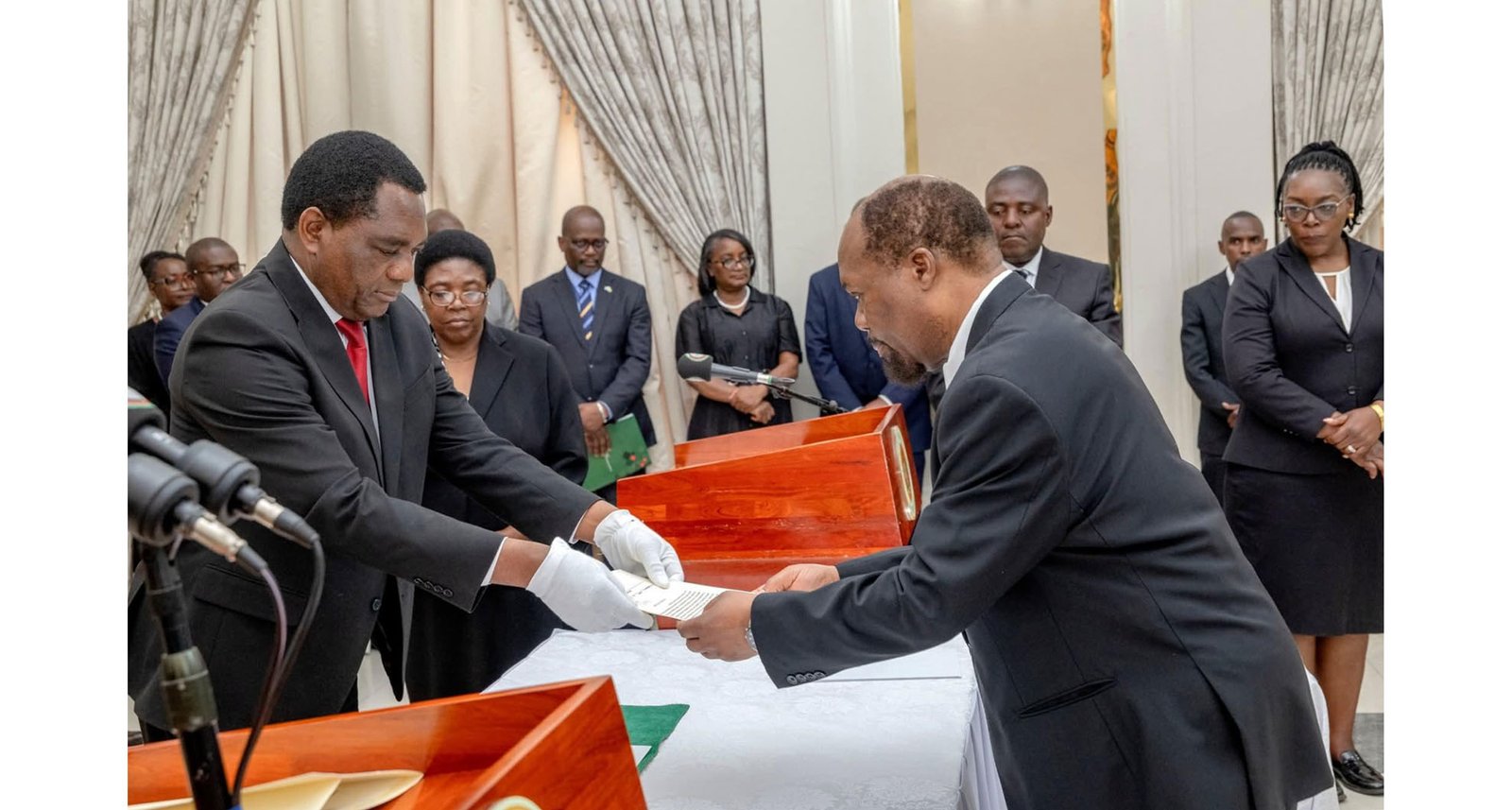
Exhibit 4: Signage for the Cornelio Mufundisi Muuka Memorial Clinic being financed by Ambassador, Professor Muuka, at his Sinundwe Village, 25 KM west of Monze in the Southern Province of Zambia.
Seven years now. From his own salary. While serving as Dean. While serving as Consul General. Now sworn in as Ambassador. Without anyone asking him. Without anyone counting.
The man who raised his right hand at State House on September 22, 2025, was not built that morning. He was revealed. The oath did not confer authority. It recognized authority that had been operating, quietly and at personal cost, for decades.
This is the leadership truth his life makes visible, and it is the one most leaders are still waiting to learn. We are waiting for the promotion. We are waiting for the ordination. We are waiting for the platform, the email, the invitation, and the permission slip that tells us we are now allowed to lead. We have confused the title with the call. We assume the office confers authority. It does not. Authority is conferred by the call and proven in the carrying. The title is recognition that arrives after the work, sometimes long after, and sometimes never. Either way, the work is what we will answer for.
The implication for those who lead in business, ministry, classrooms, and communities is direct. The assignment is already in front of you. A village without a clinic. A team without a vision. A child without a lunch. A family without a steward. A platform without a voice that will tell the truth on it. The call to lead is rarely announced. It is recognized by leaders who are already paying attention and have accepted it before there is any guarantee of reward.
Pick it up before you are asked. Carry it when no one is counting. Steward it when no one is watching. The title, if it comes, will come late.
The Ambassador is finishing his clinic. His mother is waiting for it to be finished.
Somewhere, your kitchen table is waiting for you to take your seat.