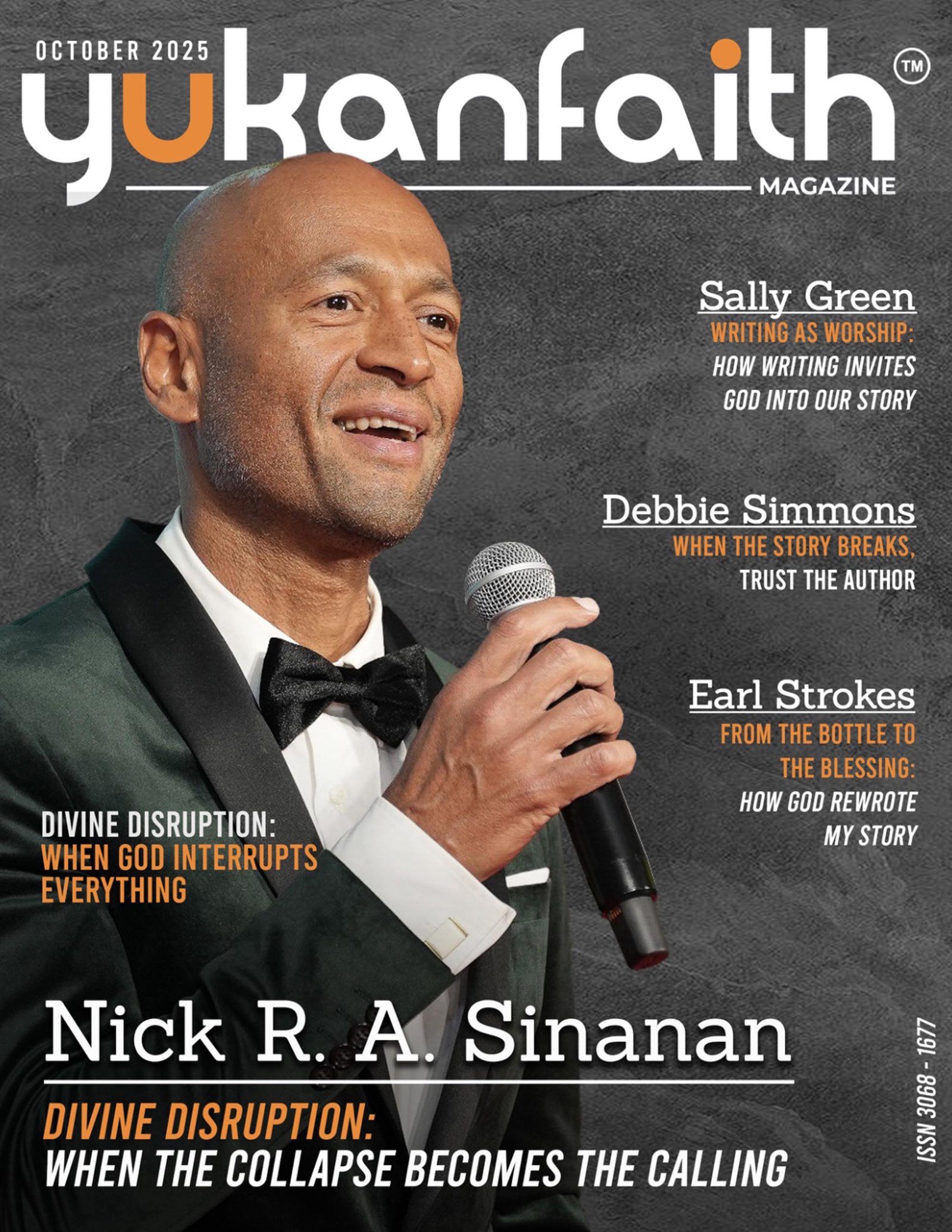
Divine Disruption: When the Collapse Becomes the Calling
Conversational AI that listens, understands, and acts

By Nick R. A. Sinanan
Conversational AI that listens, understands, and acts 222
Every life has a before and after. Mine was defined by a single moment. A crash on a university cycling track that erased everything I thought I was and opened the door to who I was meant to become. It was a test of resilience, and I emerged stronger.
I was flying, quite literally, that day. May 1st, 1996. I’d trained for this my whole life. I was fast, focused, and full of fire. The Olympics felt close enough to touch. Then everything stopped.
One accident. One cardiac arrest. The cardiac arrest occurred due to a head impact when my helmet struck the cycling track, resulting in a severe concussion and internal bleeding. While my body as an athlete remained intact, my mind had to relearn the basics—how to read, how to write, and how to remember names. It felt as if someone had wiped the slate clean and handed me chalk that I didn’t know how to hold.
People think a crash just puts your dreams on pause. It doesn’t. A real disruption doesn’t just take things away. It tears up your script and leaves you staring at a blank page. The Olympic dream disappeared. My life had to be rebuilt from scratch.
But here’s what I know now. When your story falls apart, you’re not finished. You’re simply being asked to write a different one.
Learning to Walk Forward, Not Back
Recovery wasn’t smooth or cinematic. It was jagged, full of trial and error. But I wasn’t doing it alone. I had a team — doctors, coaches, neuroscientists — who believed in pushing boundaries and testing limits.
And then there was my father. He wasn’t a physician, but he was relentless. A tech visionary and problem solver who refused to accept dead ends. He challenged the assumptions of the medical team, insisted on innovation, and wouldn’t allow anyone, least of all me, to give up.
We explored new frontiers. One of them was transcranial direct-current stimulation, a method some called “brain doping.” It wasn’t a magic switch, but it was a starting point. And when paired with determination, it became part of a wider toolkit for healing.
The emotional healing took longer. I attended the 1996 Atlanta Olympics, not as a competitor, but as a guest. I stood among peers I should have recognized instinctively, and instead felt the dull ache of disconnection. Memories didn’t return. Nightmares did.
Eventually, I turned to Rapid Transformational Therapy, a form of mental retraining that helped me confront my trauma and build new patterns of thought. It wasn’t graceful. It wasn’t easy. But it worked.
Then came the next blow.
When Dreams Close, New Ones Open
Doctors told me I’d never compete in the decathlon again, not because of a lack of strength or courage, but because of timing. The pole vault — the most technically demanding event — posed a life-threatening risk. I could manage day one, they said, but not day two.
I had a choice: sit in that disappointment or pivot. I chose the latter. I started again. I let go of muscle mass, retrained my body through swimming to regain balance, and leaned into a new path.
My father encouraged me to keep learning. I pursued sports science, taught myself Mandarin, and earned a scholarship to study in China. While volunteering at the 1998 Open Asian Championships, I met a coach from Singapore who urged me to try triathlon. I wasn’t a trained swimmer, but I was offered a state-of-the-art carbon racing bike. I said yes.
Two days later, I lined up as the only Westerner in the field. I swam, struggled, biked, and ran like something had been reignited in me. Somehow, I qualified for the 2000 Sydney Olympics. Not as a decorated hero, but as living proof that the human spirit is more powerful than any prediction.
As if life hadn’t surprised me enough, another opportunity arrived unexpectedly. A fashion designer spotted me at Shanghai Pudong Airport and offered me a global campaign. Just like that, I became the face of the new millennium.
For a moment, it felt like everything had turned around. I trained with other athletes in Bali. We were winning again. We were becoming a team. And then, tragedy struck. One of our teammates took her life, and the mood shifted.
A year out from the Games, I climbed onto a horse for what should’ve been a gentle ride. It fell. My ankle shattered. My spine took damage. Another dream ended.
The Gift of Reinvention
I began to notice a pattern. Every time I reached a peak, something collapsed. Physically, mentally, professionally. But with each fall, I discovered something new.
When the SARS outbreak hit China, I had to let go of my PhD. When the dot-com crash came, I lost everything I’d saved. These were not minor losses. There were tectonic shifts. But instead of folding, I shifted.
I applied my sports science background to real-world challenges. I collaborated with NASA. I coached top-tier athletes. I advised executives on how to manage stress and burnout. I built a life rooted in curiosity and usefulness, not just achievement.
That pivot transformed me. I learned how to adapt faster than I could be broken.
My father, now retired from IT and investing, watched me navigate the financial pitfalls many face. Together, we began drafting a book. It was to be our blueprint for the next generation — on finance, artificial intelligence, and human resilience.
Then grief hit again. In 2021, within eight weeks, I lost both my mother and father. I was left with a manuscript and a silence I didn’t know how to fill.
I stopped writing. For a while, I stopped everything. But his voice lingered, steady and insistent. I picked up the pen again, slowly at first. I had to retrain my brain to write with my non-dominant hand — something I’d practiced years ago in recovery. Eventually, the words returned. So did the mission.
The Wisdom of Being Interrupted
I no longer believe that divine disruption is a punishment or even a test. It’s a tool. A course correction. It doesn’t arrive gently or with permission. It breaks, shifts, and confronts. But it also reveals.
The first lesson I learned: when disruption comes, your true priorities stand out. For me, it wasn’t the medals. It was a service. Curiosity. Tools that help people heal, grow, and rise.
Second: disruption forces reinvention. When I lost everything, I didn’t just build it back. I built something new. I became a clinical researcher. A language learner. A coach. A strategist. Reinvention isn’t a luxury. It’s the price of relevance.
Third: disruption shows you your people. My father. The doctors who took risks. The coach from Singapore. The designer who saw beyond my scars. These weren’t coincidences. They were companions in the storm.
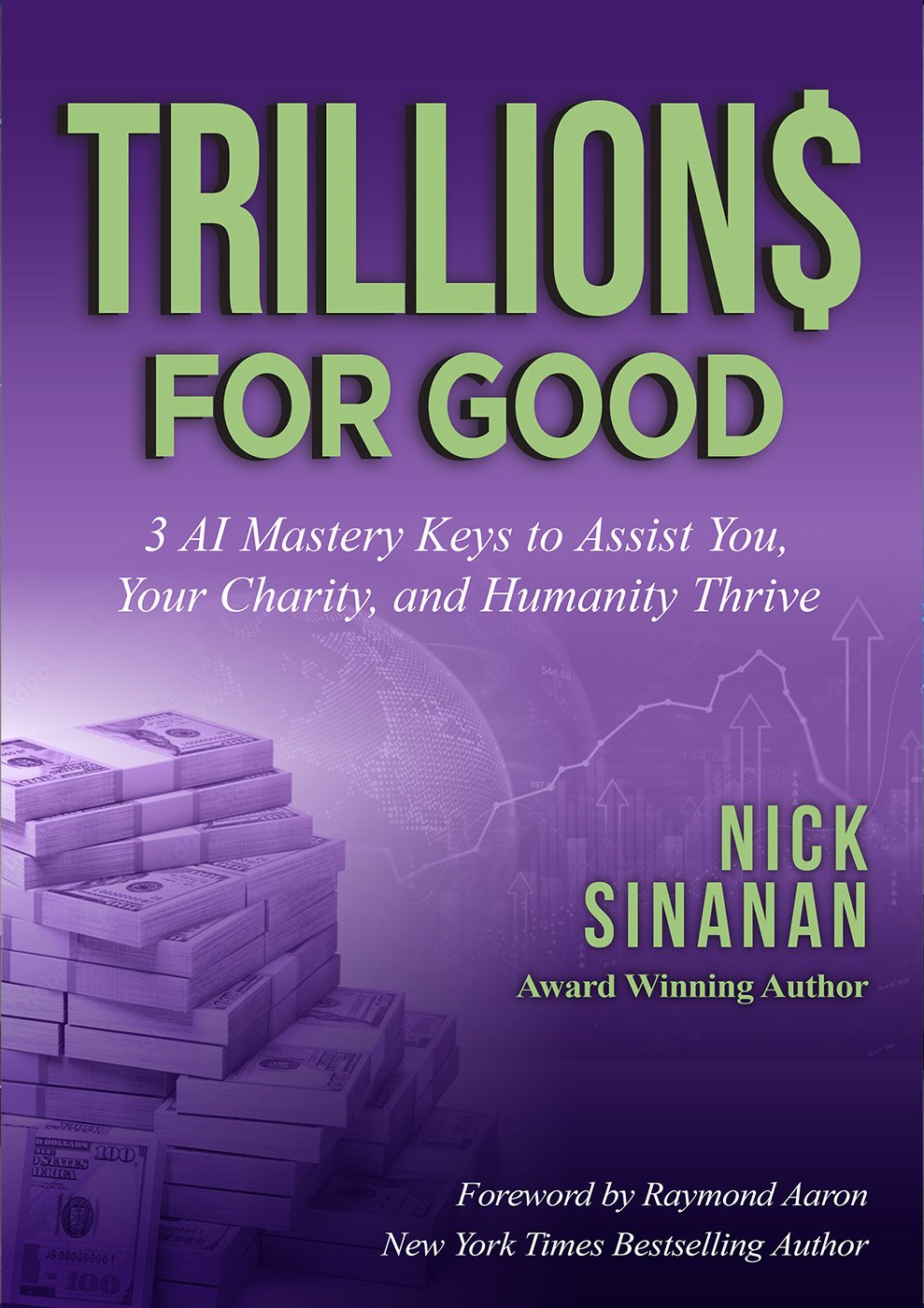
Today, the book my father and I began is complete. It’s called Trillion$ for Good: 3 AI Mastery Keys to Assist You, Your Charity, and Humanity Thrive. It’s not just a book about money or technology. It’s about legacy. About using intelligence — human and artificial — to multiply good. It’s about how people of purpose can change the game by changing how they think.
Rewriting the Ending
Here’s what I know for sure. Interruptions are not the end. They are beginnings wearing strange clothes. They might scald you. But they also refine you.
If you’re facing an interruption now — in your health, your career, your finances, or your relationships — this isn’t your finish line. It’s just a brutal, beautiful chapter. You can’t skip it. But you can choose what comes next.
Get up. Start again. Map the wreckage. Practice the small skills. Surround yourself with people who refuse to quit.
Let the interruption teach you. Then go build something unshakable.
I didn’t become the Olympic champion I once dreamed of. But I became something else — a builder of legacies, a steward of wisdom, and a man shaped not by what I lost, but by what I found in the ruins.
When God interrupts your life, it’s not theft. It’s a transformation. Pay attention. Then get to work.
To learn more about Nick or to order his book Trillion$ for Good: 3 AI Mastery Keys to Assist You, Your Charity, and Humanity Thrive. Visit https://www.trillionsforgood.com/
October 2025: Nick R. A. Sinanan