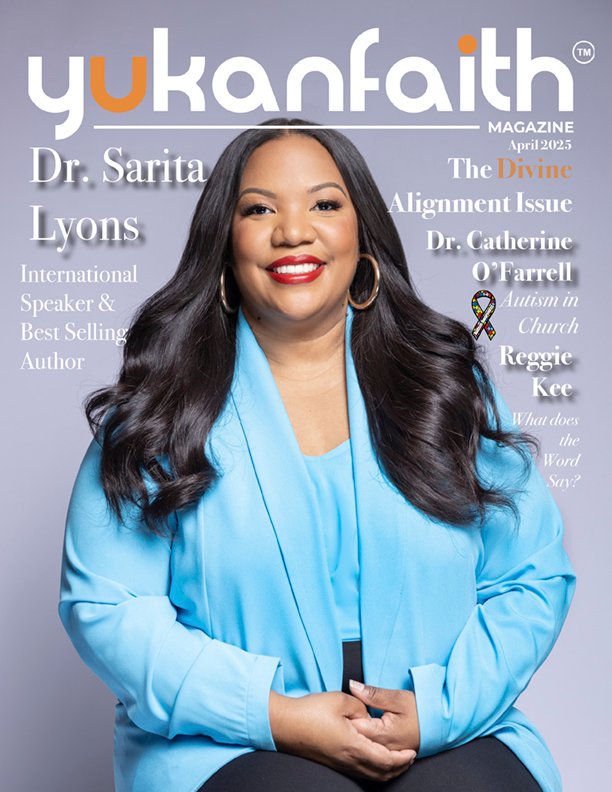
“When You Know Who You Are, You Stop Shrinking” An Alignment Journey
Dr Sarita Lyons
Before she was a clinical psychologist, preacher, or international speaker, Dr. Sarita Lyons was a college student searching for herself. Raised by Christian parents and proudly active in church as a child—Bible tracts in hand, leading recess Bible studies—Dr. Sarita once embodied what many saw as a model “Church Girl.” But as she tells it, “Being raised in church and knowing church things didn’t mean I really knew Jesus.”
That changed in college. Wanting to connect more deeply to her cultural identity as a black woman, Sarita found herself drawn into Yoruba spirituality and Kemetic teachings. “At first, I tried to blend it all together,” she writes in Church Girl.
“But eventually the truth got crowded out.” She was reading about African deities, building altars to ancestors, practicing divination. “There was a lot of community—but there was no Christ.”
The turning point came on a seemingly normal night. Her father called, as he often did, to pray over her. At that same moment, someone in her apartment loudly disrespected Jesus. Something broke. “I screamed, ‘Get out!’ and cleared everyone out of my apartment,” she recalls. “I wasn’t thinking or feeling. I was just moving—obeying. The Holy Spirit took over.”
She dismantled her altar. Tossed tarot cards, beads, candles, books—anything tied to deception. “I was sick. I ended up passed out on my bathroom floor,” she writes. But when she woke up, something had shifted. “I saw my old Bible peeking out from under my bed—the NKJV, tattered and dusty. I grabbed it. I didn’t know what to read, so I just flipped pages and asked God to lead me.”
She landed on Jeremiah 2: “I remember you, the kindness of your youth… when you went after Me in the wilderness.” It wrecked her. She wept, repented, and surrendered.

In the mirror that night, she made a vow: “I’ll go wherever You want me to go. I’ll do whatever You want me to do. Just let me know You like I’ve never known You before.”
“Our Identity Is Not Something We Find or Create—It’s a Bestowed Gift”
Dr. Sarita Lyons is clear: “Identity is not something you discover on a retreat or make up in a moment of affirmation. It’s something you receive. It’s bestowed by God.”
In both her writing and speaking, she teaches that the confusion many women—especially Black Christian women—experience about identity comes from trying to build a self from outside sources: performance, pain, and cultural labels. But identity, she says, begins with God’s voice, not the world’s applause. She urges women to do a spiritual audit:
“Write out everything you believe about yourself. Then ask, “Who told me this?” And more importantly, “Does God agree?”
“We confuse doing with being,” she explains. “We list our roles, our titles, our productivity—our fruit—and think that’s who we are. But we are not our fruit. We’re called to bear fruit, but we are children of God first. That’s who we are.”
Going back to the Garden of Eden, Dr. Lyons reminds us that the first woman ever created—Eve—was free. “We don’t talk about that enough,” she says. “She was free. Not wounded. Not shaped by oppression or patriarchy or trauma. She was the first woman to ever be born free. That is our spiritual birthright.”
And she’s not just referring to metaphor. She draws from Genesis and the Hebrew term Ezer, often translated as “helper,” but more accurately understood as a military-level support role—the kind of strength and partnership God uses to describe Himself.
“It’s not Hamburger Helper,” she jokes. “It’s not decorative. It means the mission cannot succeed unless the Ezer shows up. That’s what God says about us.”
But then she expands. “God doesn’t just call us helpers. He calls us influencers. Life-givers. Free. And in the New Testament, our identity increases—we are sons and daughters of God, living epistles, royal priesthood, the redeemed, the sent.”
Her point is clear: everything God said about women in the beginning was intentional and sacred. The culture may try to revise it—or distract from it—but God’s Word gives us a gospel vision for identity.
She warns against embracing cultural identities that contradict Scripture, even when well-meaning. “You can’t call yourself a goddess and also say Jesus is Lord. It’s incompatible,” she writes in Church Girl. “The world’s labels might be meant to uplift—but they should only ever serve as exclamation points, never as replacements for what God has already said.”
And she knows firsthand how disorienting it is to try to find yourself in cultural spaces that weren’t built with you in mind. “Black women have often had to translate Christian teaching for ourselves,” she says. “We’ve read books not written to us, for us, or about us. But the truth is—we are seen. We are known. We are fully loved and fully called.”
In Church Girl, she writes: “God made the Black woman. God died for you, redeemed you, and endowed you with power and purpose. God gave you an identity that only he could give, and you are called to show off the glory of Christ by showing up in life fully as a Black woman.”
That means stepping into identity isn’t just a personal win—it’s a divine assignment. “When we walk in the truth of who God says we are, it doesn’t just dignify us—it glorifies Him.”
“It’s Not About Figuring It Out—It’s About Obedience”
When asked what divine alignment looks like in this season, Dr. Lyons doesn’t offer formulas—she speaks of kairos, God’s divine timing, and providence, His quiet, intentional orchestration of ordinary events. “Sometimes you don’t even know it’s alignment until after it happens.”
For her, divine alignment is less about big signs and more about sensitivity. It’s about recognizing God’s hand in what feels like a coincidence—like meeting someone at a random event, or taking a job that unexpectedly becomes a mission field.
“The Book of Esther is a beautiful picture of providence,” she explains. “She was in a bad place, but in a good position. And that’s how God moves—through people, places, and moments that don’t always feel divine until the fruit shows up later.”
But even divine alignment comes with a cost. “Obedience still stretches me,” she says. “It’s different in this season. God’s ‘yes’ is weighty now in ways it wasn’t before.”
“Alignment Sometimes Means Grief”
Divine alignment also reshapes relationships—some grow, some fall away. For Dr. Lyons, that’s part of the refinement process. It’s what happens when you begin to walk more closely with your purpose.
“As we heal and grow, some relationships no longer fit,” she says. “And that doesn’t mean they were bad. It just means they were for a different season.”
She’s had to learn how to grieve certain connections while blessing their role in her life. And it’s not easy. “Letting go with grace is hard,” she admits. “But I trust that when God realigns something, it’s never random. He’s never wasteful.”
“Rest Is Resistance”
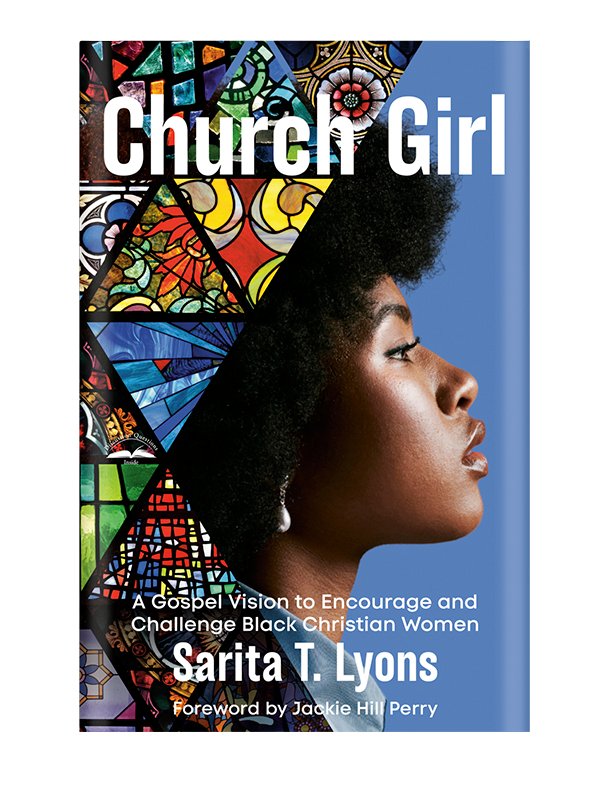
In Church Girl, Dr. Lyons reframes rest not just as recovery—but as a form of spiritual rebellion against overwork, comparison, and hustle culture.
“There is an epidemic of Black women finding rest elusive.”
Rest isn’t just naps and vacations, though those matter. It’s a mindset shift. It’s about learning to see rest as sacred. “Jesus rested. He modeled it,” she writes. “We’re not meant to go non-stop. We need stillness to heal and hear God.” She describes scrolling through social media and feeling that pull of comparison. Instead of spiraling, she prays: God, thank you for my life. Then she adds this: “God, show me how you want me to rest. Help me notice the ways you’ve already made space for me to breathe. Help me stop watching everyone else’s life and start living mine.” Rest, for Dr. Lyons, is no longer optional.It’s part of her alignment. It’s how she resists the lie that worth is earned through exhaustion.
“God’s Secret Will Is Not for Us to Figure Out—It’s for Us to Obey”
Through her faith, scholarship, and transparency, Dr. Lyons reminds us that divine alignment isn’t about chasing clarity. It’s about pursuing Christ. Her story is not clean or tied up in a bow. There’s pain. There’s pruning. But there is also peace. “I’ve stopped asking for answers,” she says. “Now I ask for awareness. I ask to be in tune.”
And for all the church girls finding their way—those healing from wounds, unlearning performance, and rediscovering their God-given identity—Dr. Sarita Lyons offers a mirror and a map. She’s walked through fire and found divine alignment on the other side.
Dr Sarita Lyons:
“God doesn’t just call us helpers. He calls us influencers. Life-givers. Free.”
“Obedience still stretches me. God’s yes feels weightier in this season.”
“Sometimes we’re in bad places, but we’re in good positions for God to use us.”
“He prayed for me before I believed. He aligned me before I even asked.”
“I’ve stopped asking for answers,” she says. “Now I ask for awareness. I ask to be in tune.”
April 2025: Dr. Sarita Lyons