
Dropout to Doctor: Faith, Healing, and the Journey to Resilience
By Dr. Linda J. Hart
“When I was a child, I spoke as a child, I understood as a child, I thought as a child; but when I became a man, I put away childish things.” (I Corinthians 13:11)
There comes a time in life when faith must mature, when what we believe begins to shape how we respond, heal, and move forward.
I can remember as a child, as well as in my early years of salvation, thinking that faith was the key to getting what you wanted out of life or from God. If you believed, God would show up and deliver instantly, in phenomenal ways. If not, we manipulated our faith to meet God’s sovereignty.
While faith is the key, I learned that faith requires more. It requires understanding. It requires action. And often, it requires healing.
I have lived and learned that some suffering is not only spiritual but also connected to a lack of understanding, awareness, and the steps we are willing to take toward change.
I recall a season where I felt shipwrecked, stuck in what seemed like emotional and mental quicksand. My marriage had dissolved, I was between jobs with no money, and I had three dependent children at home.
Though I was a licensed minister, I found myself deeply identifying with those who gathered in distress, debt, and discontentment.
This was not a lack of faith. I was committed to God. I prayed, I served, and I gave. Yet something within me felt unsettled.
For years, it felt like walking blindfolded through a dimly lit maze. Every time I thought I found a way out, I encountered another wall.
I cried. I prayed. I gave all I had. Still, nothing seemed to shift.
Then one day, while walking to the church with tears streaming down my face, I spoke honestly to God. I did not feel blessed. I did not feel aligned with what I believed my life should look like.
And in that moment, God responded not to my performance but to my perspective.
“You do not see or feel blessed? Consider the Earth. It spins on its axis and revolves around the sun. Do you feel it? You neither see it nor feel it, yet it is happening. So it is with you.”
That moment shifted something within me.
I began to understand that growth, healing, and transformation often happen beneath the surface, long before we feel or see the evidence.
From that point forward, I learned to listen for His voice and follow, rather than allowing my emotions or circumstances to dictate my sense of progress.
Faith became less about what I felt and more about how I moved.
Then one day I read II Peter 1:2–4 and realized something profound: everything I needed had already been given. The question was no longer “Why is this happening?” but “How do I access what has already been provided?”
This realization marked the beginning of a deeper journey, not just of faith but of personal responsibility and healing.
The Path to Resilience
I came to understand that growth and healing require intentional practices. These are not overnight transformations, but daily decisions that build inner strength over time.
1. Accountability: The Beginning of Healing
Healing begins with honesty. I had to revisit my past and present and acknowledge my role in my own suffering.
This was not about blame; it was about awareness.
True growth begins when we take ownership of our experiences, extend grace to ourselves, and release the weight of blame.
2. Alignment: Reconnecting with Purpose
Alignment is more than structure; it is connection.
I had to learn the difference between external expectations and internal guidance. As I realigned with God, I began to understand my purpose beyond limitations and circumstances.
This included returning to school in psychology, even when it did not seem to fit traditional expectations.
3. Courage: Choosing Growth Over Comfort
Growth requires courage, the willingness to face discomfort and step into the unknown.
For me, this meant embracing change mentally and emotionally, even when it challenged expectations.
Courage is not the absence of fear; it is movement in spite of it.
4. Discipline: Staying the Course
Resilience is built through consistency.
Discipline required me to care for my children, manage limited resources, and continue moving forward, one step at a time.
Healing is not instant. It is a process that requires patience, structure, and commitment.
5. Growth Mindset: Embracing the Journey
Learning is lifelong.
I had to release outdated thinking and remain open to growth. What I once believed was complete understanding often lacked depth.
True resilience comes from a willingness to grow continuously.
Conclusion: Faith in Motion, Healing in Progress
Faith is not just a belief; it is a lived experience.
It is expressed in the small, daily decisions we make to move forward, to heal, and to grow.
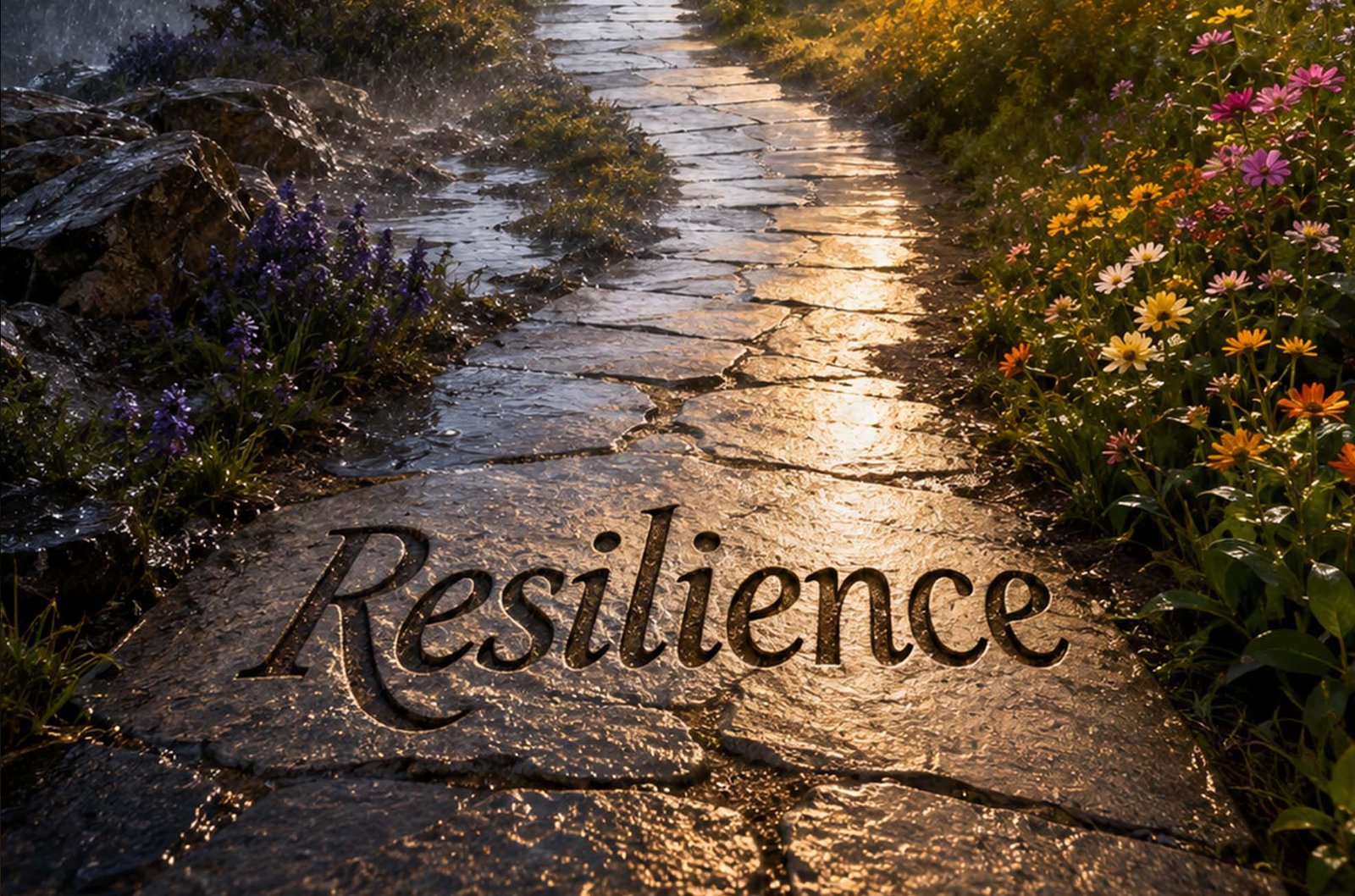
Resilience is not built in a single moment. It is cultivated through consistent choices, through accountability, alignment, courage, discipline, and growth.
Even in seasons where you cannot see or feel progress, trust that something is shifting.
You are growing.
You are healing.
You are becoming.
“Let us run with patience the race that is set before us.” (Hebrews 12:1)
Be patient with your process.
Be intentional in your healing.
And trust that what God has placed within you is still unfolding.
March/April 2026: Dr. Linda J. Hart