When Teaching Doesn’t Become Transformation
When Teaching Doesn’t Become Transformation
Closing the Discipleship Gap in the Church and the Classroom
A YuKanFaith Magazine Feature
The lesson lands. Heads nod. The closing prayer is warm and unhurried. A teenager wipes his eyes during the final song, and a grandmother whispers “amen” into the silence that follows. Sunday School is over. The room is full. The teaching has been faithful.
And a week later, life looks exactly the same.
Most of those who teach the Word, whether from a pulpit, a classroom, a kitchen table, or a small-group circle, know the quiet ache of this question. It surfaces somewhere between the closing prayer and Monday morning: did anything actually change? The lesson was good. The lesson was right. The lesson was even moving. But did it become a life?
The Learning Lamp exists for exactly this question. And the honest answer, supported by recent research and decades of classroom wisdom, is that the Church is teaching beautifully and forming unevenly. The gap between the two has a name. It is called the discipleship gap, and it is one of the most important challenges facing Christian education today.
A Mirror, Not a Scolding
In its 2024–2025 State of Discipleship study, Lifeway Research surveyed more than 2,600 U.S. Protestant pastors about how their churches understand and practice discipleship. The results are sobering, and they are best read not as an accusation but as a mirror.
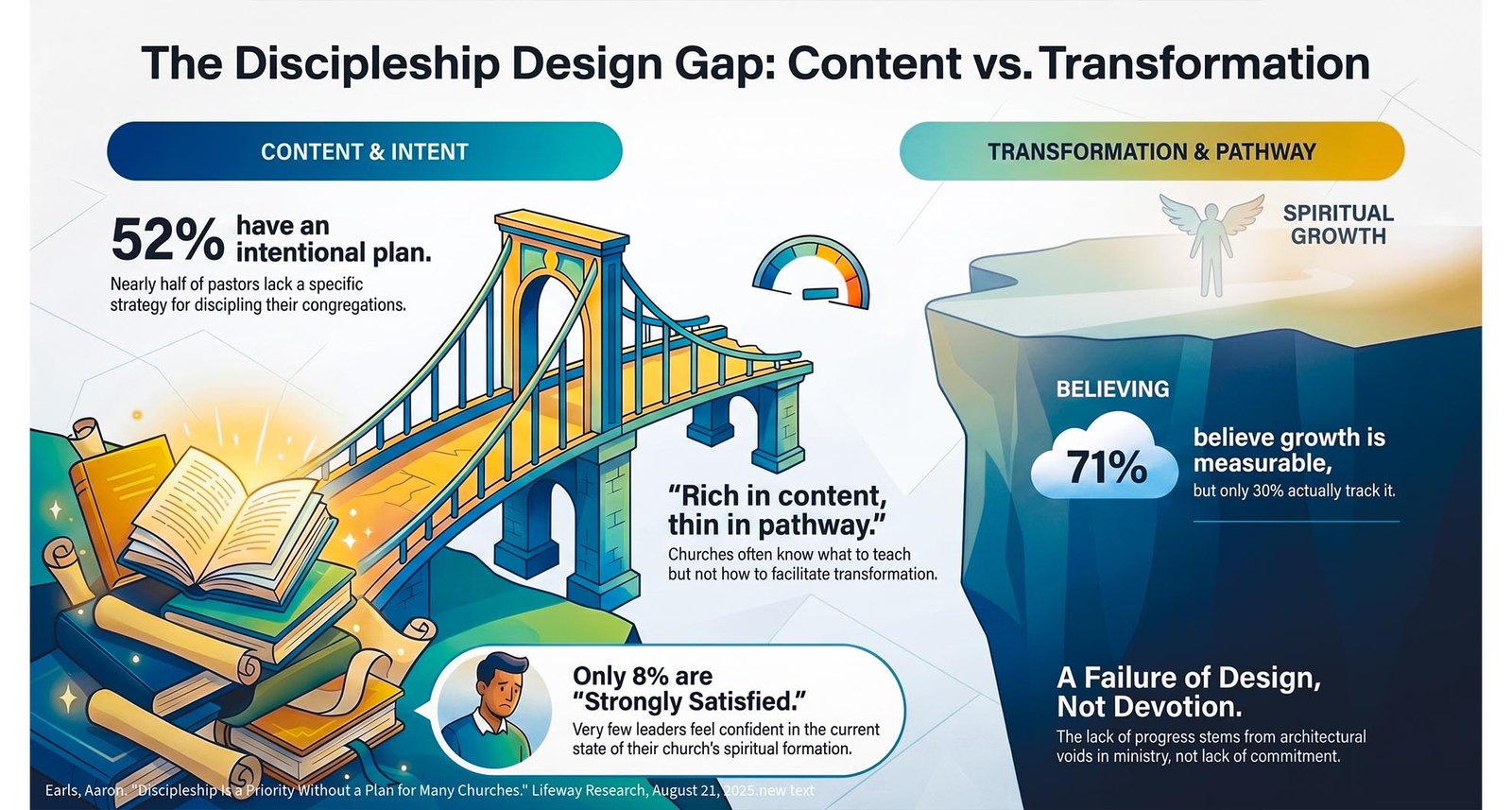
Only 52 percent of pastors say they have an intentional plan for discipling individuals in their congregations and encouraging spiritual growth. Just 8 percent strongly agree they are satisfied with discipleship and spiritual formation in their churches. And while 71 percent believe there are ways to measure spiritual growth in a congregation, only 30 percent say their church actually has specific methods for doing so.
Read those numbers slowly. Half of pastors do not have a plan. Less than a third have a way of knowing whether the plan they have is working. And only a small fraction are confidently satisfied with what is forming in the people they love and lead.
This is not a failure of devotion. Pastors and Christian educators are some of the most committed teachers in any field. It is, instead, a failure of design. Most churches and Christian classrooms are rich in content and thin in pathway. They know what to teach. They are less sure how teaching becomes transformation.
“Half of pastors do not have a plan. Most churches and Christian classrooms are rich in content and thin in pathway.”
What Educators Already Know
The discipleship gap will sound familiar to any seasoned classroom teacher, because general education has wrestled with a version of it for a long time.
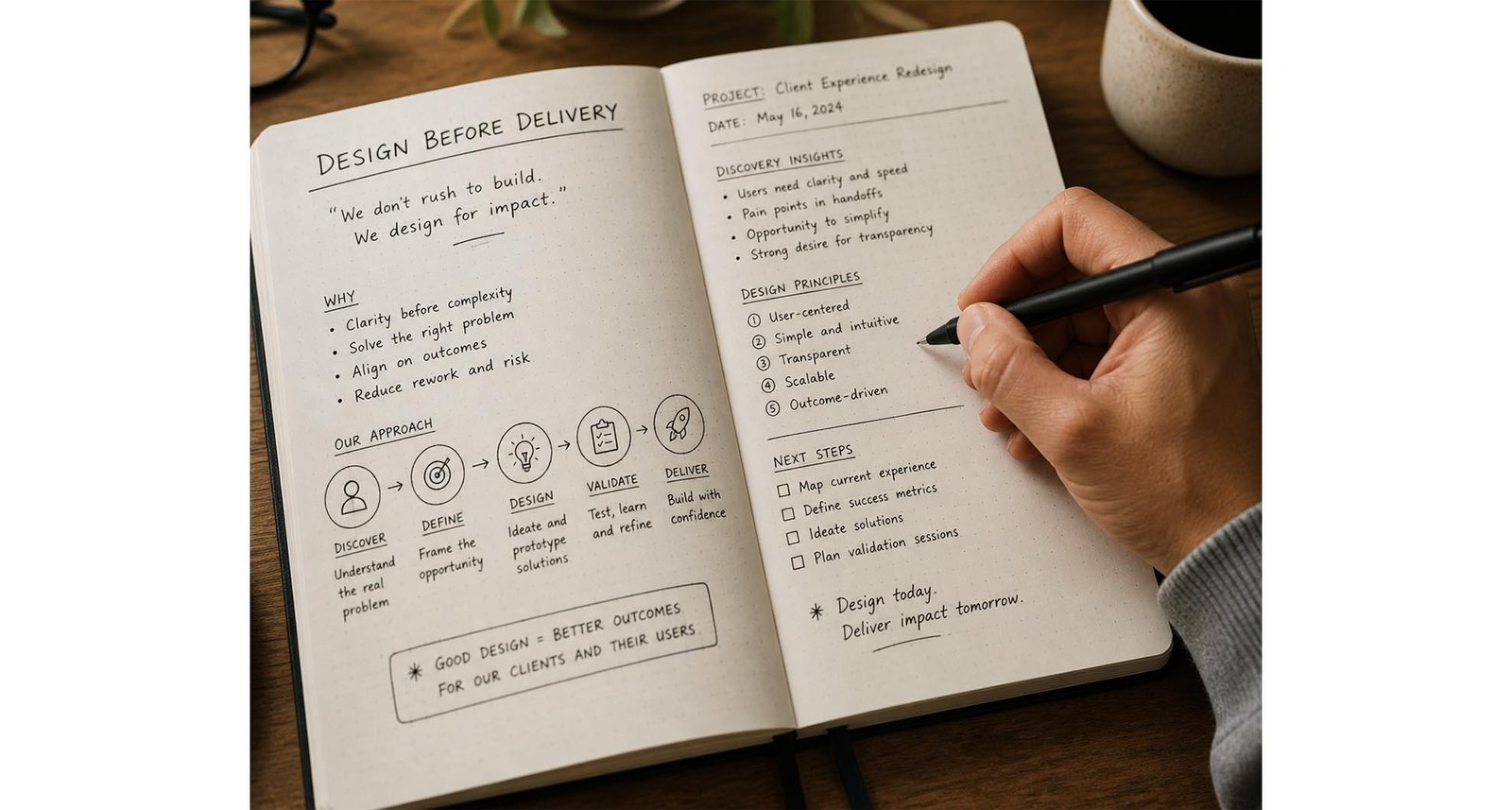
Every effective teacher knows the difference between delivering content and designing for learning. A lecture is not a lesson. A lesson is not a unit. A unit is not a year. Good educators write objectives before they write activities. They check for understanding instead of trusting a quiet room. They differentiate, because the same words land differently in different lives. They loop back when something has not been mastered, and they measure, gently, so they know when to move on.
Christian education, in many places, has not yet borrowed these tools. The Lifeway data underscores the imbalance. Nearly 9 in 10 pastors use weekly sermons as a discipleship tool, and one-third name the large-group sermon as their top priority for adult discipleship. Sermons are essential. Preaching is a gift. But a sermon is, in educational terms, a lecture, and lectures alone do not produce mastery in any subject, including the life of faith.
Discipleship needs what every classroom needs: intention before content, application during content, and reflection after content. It needs a pathway, not just a pulpit.
Five Lamps to Light the Path
What follows are five practices any parent, teacher, small-group leader, or pastor can begin this week. None of them requires a new curriculum, a bigger budget, or a longer service. Each is a small lamp. Together they illuminate a path from teaching to transformation.
Lamp 1. Write the objective before the lesson.
Before opening the Bible, ask three questions: What should the learner know by the end of this lesson? What should the learner feel? What should the learner do? A lesson designed around know, feel, and do produces different teaching than a lesson designed around “cover the passage.” The Word is not less honored when it is taught with intention. It is more so.
Lamp 2. Replace “Did you understand?” with “Show me.”
Comprehension questions reveal whether someone heard the lesson. Application questions reveal whether the lesson is taking root. Instead of “Does that make sense?” try “Tell me about a moment this week when this would have changed what you did.” The shift sounds small. The fruit is not.
Lamp 3. Build a feedback loop.
A simple monthly check-in turns a class into a journey. One verse practiced. One habit tried. One struggle named. Whether it is between a parent and a child at the dinner table, or between a small-group leader and a member over coffee, the feedback loop transforms learners from passive recipients into active disciples. Growth that is named is growth that continues.
Lamp 4. Disciple in pairs, not just in rows.
The smallest functioning classroom in the Christian tradition is two. Paul and Timothy. Naomi and Ruth. Elijah and Elisha. Mentoring is not a program; it is a posture. When a congregation begins to think of itself as a network of pairs rather than a row of seats, formation accelerates because relationship is the soil in which the Word grows.
Lamp 5. Measure what matters, gently.
Measurement is not the opposite of grace. A teacher who tracks growth is not grading souls; she is paying attention. A journal, a quarterly conversation, a single reflective question asked over time, these are gentle instruments. They tell us when to celebrate, when to encourage, and when to come alongside. The 30 percent of pastors who measure are not the most clinical among us. They are often the most pastoral.
The Heart of the Matter
It is worth saying clearly: the goal of Christian education is not a completed curriculum. It is a person becoming like Christ. Discipleship is shared growth, not solo performance. Teachers, parents, and pastors are not delivery systems. They are fellow travelers who have walked a few steps further down the road and are willing to turn around and reach back.
Intentionality is not the opposite of grace. A discipleship plan does not replace the work of the Holy Spirit. It cooperates with it. The same Spirit who breathes on the Word also honors the lamp lit beside it. Planning is not a lack of faith. Planning is faith in motion.
“The goal of Christian education is not a completed curriculum. It is a person becoming like Christ.”
Light One Lamp
Uncertainty about whether our teaching is taking root is not a sign of failure. It is the honest doorway into the kind of intentional discipleship the Spirit blesses. It is, in fact, where real Christian education begins.
So pick one lamp. Just one. Write an objective for next Sunday’s lesson. Replace one comprehension question with an application question. Start one feedback loop. Disciple one person in a pair. Notice one small marker of growth in a learner you love.
Light it. And see what God grows.
SOURCE
Statistics in this article are drawn from the Lifeway Research “State of Discipleship” study, based on a survey of 2,620 U.S. Protestant pastors conducted September 10–30, 2024. See Aaron Earls, “Discipleship Is a Priority Without a Plan for Many Churches,” Lifeway Research, August 21, 2025, and “Most Churches Rarely Evaluate Their Discipleship Strategies,” Lifeway Research, October 7, 2025. Full report available at research.lifeway.com.
— The Learning Lamp · YuKanFaith Magazine —
March/April 2026: The learning lamp